IMPORTANT SAFETY INFORMATION
INDICATIONS
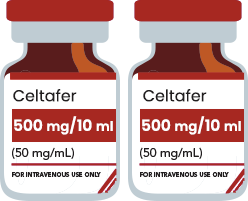
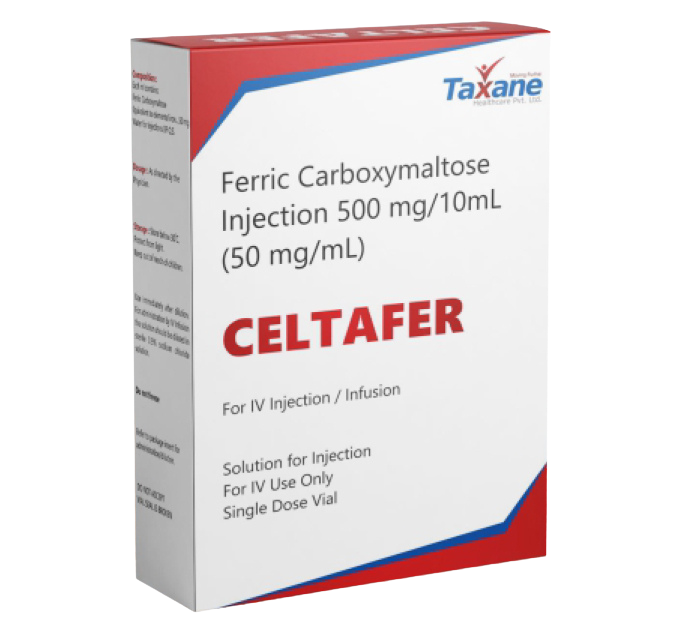
Celtafer® (ferric carboxymaltose injection) is indicated for the treatment of
iron deficiency anemia (IDA) in adult and pediatric patients 1 year of age and older who have
either intolerance or an unsatisfactory response to oral iron, and in adult patients who have
non-dialysis dependent chronic kidney disease. Celtafer is also indicated for iron deficiency in
adult patients with heart failure and New York Heart Association class II/III to improve
exercise capacity.
CONTRAINDICATIONS
Celtafer is contraindicated in patients with hypersensitivity to Celtafer or
any of its inactive components.
WARNINGS AND PRECAUTIONS
Symptomatic Hypophosphatemia
Symptomatic hypophosphatemia with serious outcomes including osteomalacia and
fractures requiring clinical intervention has been reported in patients treated with Celtafer in
the post-marketing setting. These cases have occurred mostly after repeated exposure to Celtafer
in patients with no reported history of renal impairment. However, symptomatic hypophosphatemia
has been reported after one dose. Possible risk factors for hypophosphatemia include a history
of gastrointestinal disorders associated with malabsorption of fat-soluble vitamins or
phosphate, inflammatory bowel disease, concurrent or prior use of medications that affect
proximal renal tubular function, hyperparathyroidism, vitamin D deficiency, malnutrition, and
hereditary hemorrhagic telangiectasia (HHT or Osler-Weber-Rendu syndrome). In most cases,
hypophosphatemia resolved within three months.
Correct pre-existing hypophosphatemia
prior to initiating therapy with Celtafer. Monitor serum phosphate levels in patients at risk
for chronic low serum phosphate. Check serum phosphate levels prior to a repeat course of
treatment in patients at risk for low serum phosphate and in any patient who receives a second
course of therapy within three months. Treat hypophosphatemia as medically indicated.
Hypersensitivity Reactions
Serious hypersensitivity reactions, including anaphylactic-type reactions,
some of which have been life-threatening and fatal, have been reported in patients receiving
Celtafer. Patients may present with shock, clinically significant hypotension, loss of
consciousness, and/or collapse. Monitor patients for signs and symptoms of hypersensitivity
during and after Celtafer administration for at least 30 minutes and until clinically stable
following completion of the infusion. Only administer Celtafer when personnel and therapies are
immediately available for the treatment of serious hypersensitivity reactions. In clinical
trials, serious anaphylactic/anaphylactoid reactions were reported in 0.1% (2/1775) of subjects
receiving Celtafer. Other serious or severe adverse reactions potentially associated with
hypersensitivity which included, but were not limited to, pruritus, rash, urticaria, wheezing,
or hypotension were reported in 1.5% (26/1775) of these subjects.
Hypertension
In clinical studies, hypertension was reported in 4% (67/1775) of subjects in
clinical trials 1 and 2. Transient elevations in systolic blood pressure, sometimes occurring
with facial flushing, dizziness, or nausea were observed in 6% (106/1775) of subjects in these
two clinical trials. These elevations generally occurred immediately after dosing and resolved
within 30 minutes. Monitor patients for signs and symptoms of hypertension following each
Celtafer administration.
Laboratory Test Alterations
In the 24 hours following administration of Celtafer, laboratory assays may
overestimate serum iron and transferrin bound iron by also measuring the iron in Celtafer.
ADVERSE REACTIONS
Adults
In two randomized clinical studies [Studies 1 and 2], a total of 1775
patients were exposed to Celtafer, 15 mg/kg of body weight, up to a maximum single dose of 500
mg of iron on two occasions, separated by at least 7 days, up to a cumulative dose of 1000 mg of
iron. Adverse reactions reported by >2% of Celtafer-treated patients were nausea (7.2%);
hypertension (4%); flushing (4%); injection site reactions (3%); erythema (3%); hypophosphatemia
(2.1%); and dizziness (2.1%).
Patients with Iron Deficiency and Heart Failure
The safety of Celtafer was evaluated in adult patients with iron deficiency
and heart failure in randomized controlled trials FAIR-HF (NCT00520780), CONFIRM-HF
(NCT01453608) and AFFIRM-AHF (NCT02937454) in which 1016 patients received Celtafer versus 857
received placebo. The overall safety profile of Celtafer was consistent across the studied
indications.
Post-Marketing Experience
The following adverse reactions have been identified during post approval use
of Celtafer. Because these reactions are reported voluntarily from a population of uncertain
size, it is not always possible to reliably estimate their frequency or establish a causal
relationship to drug exposure.
The following adverse reactions have been reported from
the post-marketing spontaneous reports with Celtafer: cardiac disorders: tachycardia; general
disorders and administration site conditions: chest discomfort, chills, pyrexia; metabolism and
nutrition disorders: hypophosphatemia; musculoskeletal and connective tissue disorders:
arthralgia, back pain, hypophosphatemic osteomalacia; nervous system disorders: syncope;
respiratory, thoracic and mediastinal disorders: dyspnea; skin and subcutaneous tissue
disorders: angioedema, erythema, pruritus, urticaria; pregnancy: fetal bradycardia.